
CyberSafe on the FutureCon Vancouver stage
CyberSafe was proud to participate in FutureCon Vancouver 2026, held July 9 at The Westin Bayshore. The conference brought together security professionals, CISOs, technology vendors, and industry leaders from across Canada and beyond to dig into the most pressing issues in digital security today.
Our CEO and founder, Dinis Fernandes, delivered the keynote presentation "Cybersecurity Challenges 'Supercharged by AI' — The Good, the Bad and the Ugly," examining how artificial intelligence is transforming the threat landscape — for defenders and attackers alike.
AI is this decade's cloud moment
A central theme of the keynote: AI adoption represents a shift on the scale of the move to cloud computing. It unlocks genuine innovation and efficiency gains for organizations — but it equally empowers malicious actors to run attacks that are more sophisticated, faster, and broader in reach than anything defenders have faced before.
Three challenges every security leader should be planning for
- Frontier AI models and zero-days. Advanced AI systems are increasingly capable of discovering and exploiting zero-day vulnerabilities at scale. Traditional vulnerability management — scan, prioritize, patch on a monthly cycle — needs a fundamental rethink when discovery is automated.
- Agentic AI for defense. Security teams can no longer match modern threat velocity with manual triage. Organizations must lean on automation and intelligent, agentic systems to identify, investigate, and respond to incidents at machine speed.
- Protecting AI systems themselves. As companies deploy AI models, applications, and chatbots, those systems become targets. Prompt injection, data exfiltration, and AI-specific vulnerabilities demand dedicated security controls — not just a policy document.
Why this matters for Canadian organizations
Canada is not watching this shift from the sidelines. Our recent coverage of AI-generated ransomware payloads and AI-driven threats in 2026 shows the same pattern Dinis outlined on stage: attacker adoption of AI is already operational, not theoretical. Canadian security programs that build AI into both their defenses and their risk assessments now will be the ones keeping pace in 2027.
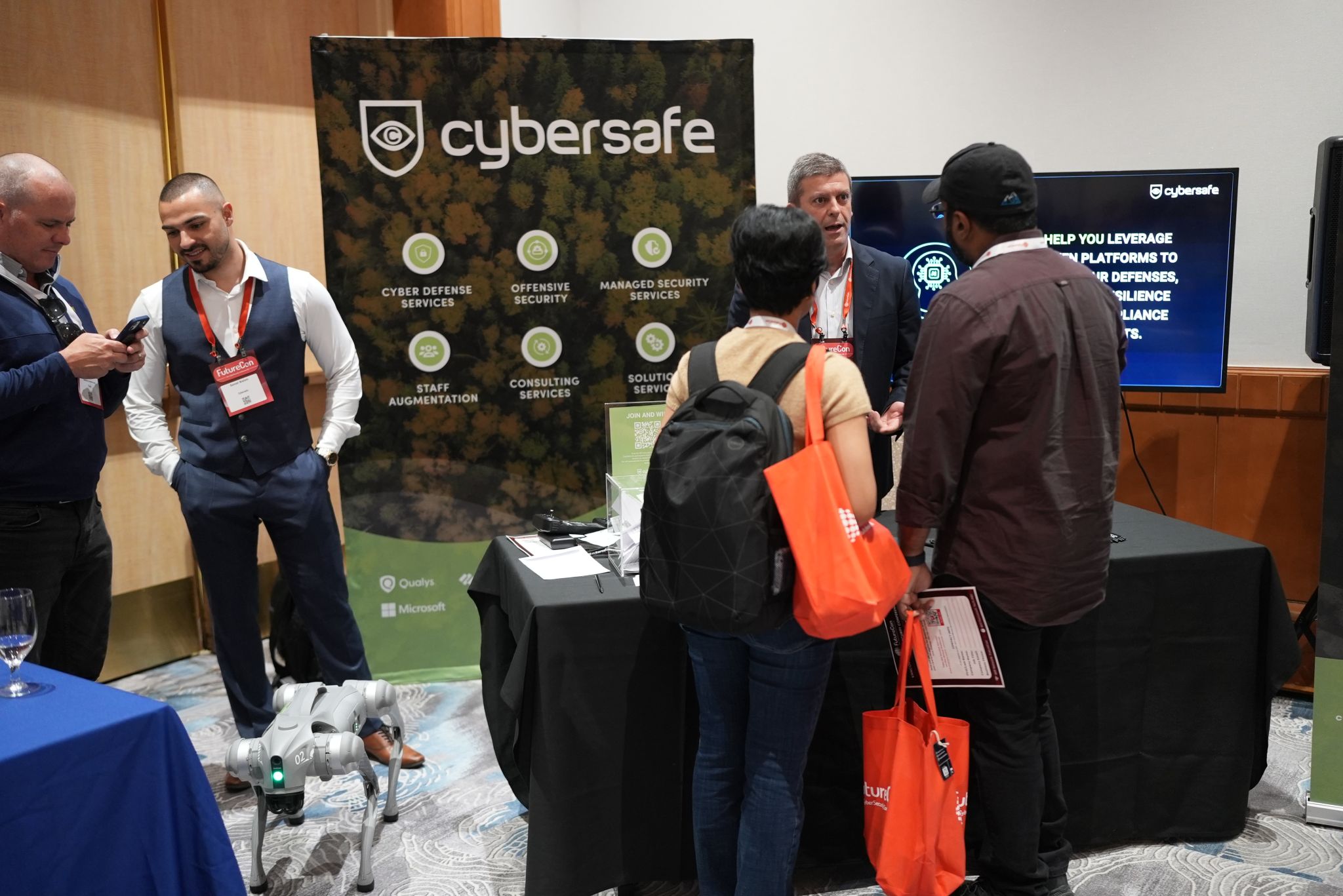
Thank you to the FutureCon team and everyone who stopped by to talk with Dinis Fernandes and Samuel Brahem — the conversations at our booth were a highlight of the day. We'll see you at FutureCon Toronto next.
Frequently asked questions
What did CyberSafe present at FutureCon Vancouver 2026?
CyberSafe CEO and founder Dinis Fernandes delivered the keynote "Cybersecurity Challenges 'Supercharged by AI' - The Good, the Bad and the Ugly." The conference was held July 9 at The Westin Bayshore, and the talk examined how AI is transforming the threat landscape for defenders and attackers alike.
What AI security challenges did the keynote highlight?
The keynote named three challenges: frontier AI models discovering and exploiting zero-day vulnerabilities at scale, which demands a rethink of monthly patch cycles; the need for agentic AI for defense to respond at machine speed; and protecting AI systems themselves from threats such as prompt injection and data exfiltration.
Why does CyberSafe compare AI adoption to the move to cloud?
The keynote's central theme was that AI adoption is a shift on the scale of the move to cloud computing. It unlocks genuine innovation and efficiency for organizations, but it equally empowers malicious actors to run attacks that are more sophisticated, faster and broader in reach than anything defenders have faced before.